

The Sabbath
1. The Sabbath serves as a divine gift, offering us a vital opportunity to pause, reflect, and rejuvenate our spiritual lives.. Ex. 20:8-1 1.
2. Since everything came into being through Christ, it stands to reason that the Sabbath was also established by Him. Heb. 1:1, 2; John 1:1-3; Col. 1:16, 17.
3. The Sabbath was established right at the dawn of creation, serving as a divine pause to celebrate rest and reflection! Gen. 2:1-3; Ex. 20:11.
4. The Sabbath was established by observing a day of rest on the very first seventh day, emphasizing the importance of taking time to spiritually reflect and study God's word. Gen. 2:1-3.
5. The second wonderful step in establishing the Sabbath was to bless it—honoring and elevating that special day above all others, making it truly sacred!. Gen. 2:1-3; Ex. 20:11.
6. The third step involves honoring the Sabbath, the seventh day, by dedicating it for sacred purposes and encouraging its observance as a time of rest and reflection! Gen. 2:1-3; Ex. 20:11.
7. The fact that God rested on the seventh day established it as the Sabbath. It was blessed as the Sabbath from the moment of creation, and thus every seventh day has been the Lord's Sabbath since. Ex. 20:1 1.
8. The Sabbath is called "the Sabbath of the Lord." (Ex.
20:10); "my Sabbaths" (Ex. 31:13); "my holy day" (Isaiah.
58:13); "Son of man is Lord of the Sabbath" (Mark 2:28)

Exodus 20:8-11
8 Remember the sabbath day, to keep it holy.
9 Six days shalt thou labour, and do all thy work:
10 But the seventh day is the sabbath of the Lord thy God: in it thou shalt not do any work, thou, nor thy son, nor thy daughter, thy manservant, nor thy maidservant, nor thy cattle, nor thy stranger that is within thy gates:
11 For in six days the Lord made heaven and earth, the sea, and all that in them is, and rested the seventh day: wherefore the Lord blessed the sabbath day, and hallowed it.
CHRIST'S TEACHING ABOUT THE SABBATH
1. Christ emphasized that God's law is eternal and unchanging. As found in Matthew 5:18 and Luke 16:17, we see these teachings as timeless truths that guide our lives with purpose.
2. The law of God was designed to stand firm and unchanging. As a result, it’s only natural that the command to observe the Sabbath would also stay the same.
3. Christ emphasized that the Sabbath was designed for the benefit of all, as highlighted in Mark 2:27. This statement underscores the importance of rest and renewal in our lives to serve the spiritual needs of humanity.
4. At Nazareth, where Christ grew up and worked as a carpenter, it was his custom to rest and attend worship on the Sabbath, thus keeping it holy.
5. Christ taught that it was lawful, according to the Sabbath law, to do well, works of necessity and mercy, on the Sabbath. Matt. 12:10-12. But this does not mean that the Sabbath should be kept as a common working day, and that they should keep another day, Sunday, instead of the seventh.
6. When Christ predicted the conquest of the Jews by the Romans, he instructed his disciples to flee immediately from Judea—whether from the fields or from the rooftops—into the mountains. He urged them to pray that their escape would not occur in winter or on the Sabbath, indicating that both winter and the Sabbath remain relevant even today. (Matthew 24:15-20)
Note —The conquest of the Jews by the Romans ended with the capture of Jerusalem, A. D. 70.
7. " 'Pray ye that your flight is not in the winter; neither on the Sabbath day', Christ said. He who made the Sabbath did not abolish it, nailing it to his cross. The sabbath was not rendered null and void by his death. Forty years after his crucifixion it was still to be held sacred. For forty years the disciples were to pray that their flight might not be on the Sabbath day." Desire of Ages, by E. G. White, chapter 69, paragraph 8.
8. Christ instructed his disciples to teach all nations, not just the Jews, to observe everything he commanded (Matthew 28:19-20). Therefore, they should convey that the Sabbath was created for everyone and that all should pray for guidance in observing it (Mark 2:27; Matthew 24:20).
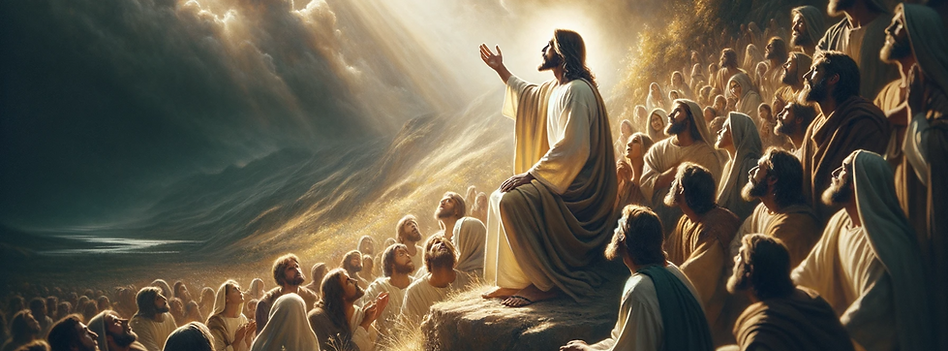
Jesus stood by the ark, and as the saints' prayers came up to Him, the incense in the censer would smoke, and He would offer up their prayers with the smoke of the incense to His Father. In the ark was the golden pot of manna, Aaron's rod that budded, and the tables of stone which folded together like a book. Jesus opened them, and I saw the ten commandments written on them with the finger of God. On one table were four, and on the other six. The four on the first table shone brighter than the other six. But the fourth, the Sabbath commandment, shone above them all; for the Sabbath was set apart to be kept in honor of God's holy name. The holy Sabbath looked glorious--a halo of glory was all around it. I saw that the Sabbath commandment was not nailed to the cross. If it was, the other nine commandments were; and we are at liberty to break them all, as well as to break the fourth. I saw that God had not changed the Sabbath, for He never changes. But the pope had changed it from the seventh to the first day of the week; for he was to change times and laws. {Early Writings page 32.3}
The substitution of the laws of men for the law of God, the exaltation, by merely human authority, of Sunday in place of the Bible Sabbath, is the last act in the drama. When this substitution becomes universal, God will reveal Himself. He will arise in His majesty to shake terribly the earth. He will come out of His place to punish the inhabitants of the world for their iniquity, and the earth shall disclose her blood, and shall no more cover her slain.—Testimonies for the Church 7:141. { ChS 160.2}

Those who honor the Bible Sabbath will be denounced as enemies of law and order, as breaking down the moral restraints of society, causing anarchy and corruption, and calling down the judgments of God upon the earth. Their conscientious scruples will be pronounced obstinacy, stubbornness, and contempt of authority. They will be accused of disaffection toward the government. Ministers who deny the obligation of the divine law will present from the pulpit the duty of yielding obedience to the civil authorities as ordained of God. In legislative halls and courts of justice, commandment-keepers will be misrepresented and condemned. A false coloring will be given to their words; the worst construction will be put upon their motives. {GC88 - Great Controversy 1888 edition, 592.1}
The Sabbath will be the great test of loyalty, for it is the point of truth especially controverted. When the final test shall be brought to bear upon men, then the line of distinction will be drawn between those who serve God and those who serve Him not. {Last Day Events page 225.2} {Maranatha page 162.4}
Was the Sabbath abolished at the Cross?
"But pray ye that your flight be not in the winter, neither on the Sabbath day." Christ, who made the Sabbath, did not abolish it, nailing it to His cross. The fourth commandment was not rendered null and void by His death. It was to be held sacred forty years after His death; even as long as the heavens and the earth remain, so long will it hold its claim upon the human family. {Signs of the Times, February 20, 1901 par. 12}
Constantine and the first Sunday Observance
In A.D. 313, the Roman Emperor Constantine, a pagan sun worshiper, nominally accepted Christianity as a matter of political advantage to gain more power. He named himself Bishop of the Catholic Church and enacted the first civil law regarding Sunday observance in A.D. 321:

“On the venerable day of the sun let the magistrate and people residing in cities rest, and let all workshops be closed. In the country however, persons engaged in agricultural work may freely and lawfully continue their pursuits; because it often happens that another day is not so suitable for grain growing or for vine planting; lest by neglecting the proper moment for such operations the bounty of heaven should be lost.” – Schaff’s History of the Christian Church, vol. III, chap. 75.
In A.D. 325, Pope Sylvester officially named Sunday “the Lord’s Day.” And in A.D. 338, Eusebius, the court bishop of Constantine, wrote, “All things whatsoever that it was the duty to do on the Sabbath (the seventh day of the week) we (Constantine, Eusebius, and other bishops) have transferred to the Lord’s Day (the first day of the week) as more appropriately belonging to it.”
“The earliest recognition of the observance of Sunday is a constitution of Constantine in 321 A.D., enacting that all courts of justice, inhabitants of towns, and workshops were to be at rest on Sunday.” – Encyclopedia Britannica. Vol. XXIII, p. 654
Feasts and Holidays

Q. How prove you that the church hath power to command feasts and holy days?
A. By the very act of changing the Sabbath into Sunday, which Protestants allow of; and therefore they fondly contradict themselves, by keeping Sunday strictly, and breaking most other feasts commanded by the same church.
Q. How prove you that?
A. Because by keeping Sunday, they acknowledge the church’s power to ordain feasts, and to command them under sin; and by not keeping the rest [of the feasts] by her commanded, they again deny, in fact, the same power. An Abridgment of the Christian Doctrine – Rev. Henry Tuberville, D.D. (R.C.), (1833), p. 58.
Alterations in the commandments of God?

Q. Has the [Catholic] church power to make any alterations in the commandments of God?
A. …Instead of the seventh day, and other festivals appointed by the old law, the church has prescribed the Sundays and holy days to be set apart for God’s worship; and these we are now obliged to keep in consequence of God’s commandment, instead of the ancient Sabbath.
– The Catholic Christian Instructed in the Sacraments, Sacrifices, Ceremonies, and Observances of the Church By Way of Question and Answer, by RT Rev. Dr. Challoner, p. 204.
The Sabbath Changed into Sunday

“They [the Catholics] allege the Sabbath changed into Sunday, the Lord’s day, contrary to the decalogue, as it appears; neither is there any example more boasted of than the changing of the Sabbath day. Great, they say, is the power and authority of the church, since it dispensed with one of the ten commandments.”
The Augsburg Confession – Art. 28.
The Church has power to institute festivals of precept?

Q. Have you any other way of proving that the Church has power to institute festivals of precept?
A. Had she not such power, she could not have done that in which all modern religionists agree with her. She could not have substituted the observance of Sunday the first day of the week, for the observance of Saturday the seventh day, a change for which there is no Scriptural authority.
A Doctrinal Catechism – Rev. Stephen Keenan, (1851), p. 174.

“Christians shall not Judaize and be idle on Saturday [Sabbath], but shall work on that day. . . . If, however, they are found Judaizing, they shall be shut out from Christ.”
Hefele’s “History of the Councils of the Church,” Vol. II, page 316. Council of Laodicea, Canon 29 (decree concerning the Sabbath and Christians who continued to observe it)

“You may read the Bible from Genesis to Revelation, and you will not find a single line authorizing the sanctification of Sunday. The Scriptures enforce the religious observance of Saturday, a day which we never sanctify.”
Cardinal Gibbons, in “The Faith of Our Fathers,” 1892 edition, page 111.

Q. What do Catholics say of the observance of Sunday by Protestants?
A. "It was the Catholic Church which, by the authority of Jesus Christ, has transferred this rest to the Sunday in remembrance of the resurrection of our Lord. Thus the observance of Sunday by the Protestants is an homage they pay, in spite of themselves, to the authority of the [Catholic] church.
-"Plain Talk About the Protestantism of Today," by Mgr. Segur, page 213.
It [the Roman Catholic Church] has reversed the fourth commandment, doing away with the Sabbath of God's Word, and instituting Sunday as a holy day." - N. Summerbell, in "History of the Christians," page 418.
"Sunday is a Catholic institution, and its claims to observance can be defended only on Catholic principles. . . . From beginning to end of Scripture there is not a single passage that warrants the transfer of weekly public worship from the last day of the week to the first.' - Catholic Press (Sydney, Australia), AUGUST 25, 1900.
"IS there no express commandment for observing the first day of the week as Sabbath, instead of the seventh day? None whatever. Neither Christ, nor His apostles, nor the first Christians celebrated the first day of the week instead of the seventh as the Sabbath."- New York Weekly Tribune, May 24, 1900.

"The Christian church made no formal, but a gradual and almost unconscious transference of the one day to the other."
‘'The Voice From Sinai," by Archdeacon W. F. Farrar page 167. This of itself is evidence that there was no divine command for the change of the Sabbath.
"The primitive Christians had a great veneration for the Sabbath, and spent the day in devotion and sermons. And it is not to be doubted but they derived this practice from the Apostles themselves, as appears by several scriptures to the purpose." "Dialogues on the Lord's Day," p. 189. London: 1701, By Dr. T.H. Morer
"The primitive Christians did keep the Sabbath of the Jews;...therefore the Christians, for a long time together, did keep their conventions upon the Sabbath, in which some portions of the law were read: and this continued till the time of the Laodicean council." "The Whole Works" of Jeremy Taylor, Vol. IX,p. 416 (R. Heber's Edition, Vol XII, p. 416).
"The Gentile Christians observed also the Sabbath," - Gieseler's "Church History," Vol.1, ch. 2, par. 30, 93.
"From the apostles' time until the council of Laodicea, which was about the year 364, the holy observance of the Jews' Sabbath continued, as may be proved out of many authors: yea, notwithstanding the decree of the council against it." "Sunday a Sabbath." John Ley, p.163. London: 1640.

"Down even to the fifth century the observance of the Jewish Sabbath was continued in the Christian church, but with a rigor and solemnity gradually diminishing until it was wholly discontinued." -"Ancient Christianity Exemplified," Chap. 26, sec. 2.

The historian Socrates, who wrote about the middle of the fifth century, says: "Almost all the churches throughout the world celebrate the sacred mysteries on the Sabbath of every week, yet the Christians of Alexandria and at Rome, on account of some ancient tradition, refuse to do this." "Ecclesiastical History," book 5, chap. 22. Sozomen
"The people of Constantinople, and of several other cities, assemble together on the Sabbath as well as on the next day; which custom is never observed at Rome." - "Ecclesiastical History," book 7, chap. 19. Sozomen
The churches of Africa held the Sabbath as it was held by the papal church before her complete apostasy. While they kept the seventh day in obedience to the commandment of God, they abstained from labor on the Sunday in conformity to the custom of the church. Upon obtaining supreme power, Rome had trampled upon the Sabbath of God to exalt her own; but the churches of Africa, hidden for nearly a thousand years, did not share in this apostasy. When brought under the sway of Rome, they were forced to set aside the true and exalt the false sabbath; but no sooner had they regained their independence than they returned to obedience to the fourth commandment. (See Appendix.) Great Controversy, page 578.1
MORE QUESTIONS?
1. By whom was the Sabbath instituted?
The Sabbath was instituted by the Creator. Ex. 20:8-11.
2. Who created all things? Then who instituted the Sabbath?
But since all things were created by Christ, therefore, the Sabbath must have been instituted by Christ. Heb. 1:1, 2; John 1:1-3; Col. 1:16, 17.
3. When was the Sabbath instituted?
The Sabbath was instituted at creation. Gen. 2:1-3; Ex. 20:11.
4. What was the first step in instituting the Sabbath?.
The first step taken in instituting the Sabbath was resting on the first seventh day of time. Gen. 2:1-3.
5. Whose rest day did the seventh day become and why?
This resting on the seventh day made the seventh day the Lord's rest day, or Sabbath, the same as the day on which we were born becomes our birthday.
6. Explain the second step. And what did that make the Sabbath?
The second step taken in instituting the Sabbath was blessing it, that is, honoring that day and making it holy above all other days. Gen. 2:1-3; Ex. 20:11.
7. Name the third step and what it meant.
The third step was sanctifying the Sabbath, the seventh day; that is, setting it apart for a holy use, or commanding it to be kept holy. Gen. 2:1-3; Ex. 20:11.
8. Which of these three steps made the seventh day the Sabbath? Ex. 20:11.
The fact of God's resting on the seventh day made it the Sabbath, for it was already the Sabbath when he blessed it; therefore every seventh day has been the Lord's Sabbath ever since creation. Ex. 20:11.
9. What is the only reason God has ever given for blessing and sanctifying the Sabbath?
God’s purpose for blessing and sanctifying the seventh day comes from His act of resting on that day after creation. This divine pause not only completes the creation story but also signifies that the Sabbath was established right from the beginning.
10. What expressions prove that the Creator, Christ, instituted the Sabbath?
The Sabbath is called "the Sabbath of the Lord." (Ex. 20:10); "my Sabbaths" (Ex. 31:13); "my holy day" (Isaiah. 58:13); "Son of man is Lord of the Sabbath" (Mark 2:28),
11. By what title would it have been designated if instituted by some individual?
Isn't it fascinating that the Sabbath isn't linked to any specific person or nation? Rather, it bears the mark and name of the Creator, serving as a powerful reminder of its deep-rooted origins. This highlights a remarkable connection to a higher purpose in our lives!
12. Study the note carefully.
Note. —The Lord's Sabbath beautifully reminds us of the awe-inspiring wonders of creation, celebrating that magnificent divine act in a timeless way. Rooted in the essential truths of our existence, the Sabbath reflects the eternal nature of what it commemorates. This commandment powerfully affirms God's creative authority, lifting it beyond a simple ritual to become a crucial moral foundation that inspires us daily. Embracing the Sabbath enriches our lives and strengthens our connection to the essence of creation, encouraging us to appreciate the world around us with gratitude and joy!
Gen. 2:1-3 and Ex. 20:8.11 should be committed to memory.
ADDITIONAL QUESTIONS?
1. Why is the Sabbath binding upon all mankind
Since the Sabbath was instituted at creation and was made for man, therefore it has been binding upon all mankind since creation. Gen. 2:1-3; Mark 2:27, 28.
2. Give proof that the Sabbath command existed before the law was given on Sinai.
The Sabbath command was a part of God's law, and was in full force before Israel came to Sinai. 'Ex. 16:4, 5, 22-28.
3. How many days are alike according to the law, and what may be done on these days?
The Sabbath command teaches man that six days are alike and should be devoted to work, while the seventh is unlike the other six; for that is the Sabbath, and on it man is to rest and meet to worship God. Ex. 20:8-11; Lev. 23:3; Isa. 66:23.
4. How does the seventh day differ from the other six days, and to what should it be devoted?
Since the Sabbath is a part of God's constitutional law, therefore no text of Scripture may be interpreted contrary to the Sabbath law. When it is said that they gathered manna `every day," or that "every day is alike," it must be understood to mean only the six working days. Ex. 16:4, 5, 21-28; Eze. 46:1; Rom. 14:5, 6.
5. How should all texts of Scripture be interpreted when speaking of days?
Strangers, Gentiles, as well as Israel, were commanded to keep the Sabbath. Ex. 20:10.
6. Prove that strangers, or Gentiles, are also commanded to keep the Sabbath.
Every stranger, Gentile, that wished to serve 'God was required to keep the Sabbath and worship at the same temple as Israel. Isa. 56:1-7.
7. Give text which proves that all flesh are commanded to keep the Sabbath.
God commands positively that all flesh shall worship him on the Sabbath day. lsa. 66:23.
8. Of what is the keeping of the Sabbath a sign?
The observance of the Sabbath is a sign of man's loyalty
to God. Eze. 20:12, 20.
“And hallow My Sabbaths; and they shall be a sign between Me and you, that ye may know that 1 am the Lord your God.” Eze. 20:20.
In the last days, when God's people are waiting for salvation to come at the second advent, some will take hold of the Sabbath and keep it. Isa. 56:1-7; Heb. 9:28; 1 Peter 1:5.
Those who take hold of and keep the Sabbath at this time are called the "repairers of the breach," Isa. 58:1, 12-14; compare Isa, 30:8, 13.
One condition for salvation and for having the name retained in the book of life is keeping the Sabbath. Isa. 56:4, 5; 58:13, 14.