


"The framers of the Constitution recognized the eternal principle that man's relation with his God is above human legislation, and his rights of conscience inalienable. Reasoning was not necessary to establish this truth; we are conscious of it in our own bosoms. It is this consciousness which, in defiance of human laws, has sustained so many martyrs in tortures and flames. They felt that their duty to God was superior to human enactments, and that man could exercise no authority over their consciences. It is an inborn principle which nothing can eradicate."-- Congressional documents (U.S.A.), serial No. 200, document No. 271. Great Controversy, page 295.3 Read Chapter 16
In that grand old document which our forefathers set forth as their bill of rights -- the Declaration of Independence -- they declared: "We hold these truths to be self-evident, that all men are created equal; that they are endowed by their Creator with certain unalienable rights; that among these are life, liberty, and the pursuit of happiness." And the Constitution guarantees, in the most explicit terms, the inviolability of conscience: "No religious test shall ever be required as a qualification to any office of public trust under the United States." "Congress shall make no law respecting an establishment of religion, or prohibiting the free exercise thereof." Great Controversy, page 295.2 Read entire Chapter 16
And the Constitution guarantees to the people the right of self-government, providing that representatives elected by the popular vote shall enact and administer the laws. Freedom of religious faith was also granted, every man being permitted to worship God according to the dictates of his conscience. Republicanism and Protestantism became the fundamental principles of the nation. These principles are the secret of its power and prosperity. The oppressed and downtrodden throughout Christendom have turned to this land with interest and hope. Millions have sought its shores, and the United States has risen to a place among the most powerful nations of the earth. Great Controversy, page 441.1 Read entire chapter 25
"And he had two horns like a lamb." The lamblike horns indicate youth, innocence, and gentleness, fitly representing the character of the United States when presented to the prophet as "coming up" in 1798. Among the Christian exiles who first fled to America and sought an asylum from royal oppression and priestly intolerance were many who determined to establish a government upon the broad foundation of civil and religious liberty. Their views found place in the Declaration of Independence, which sets forth the great truth that "all men are created equal" and endowed with the inalienable right to "life, liberty, and the pursuit of happiness." Great Controversy, page 441.1 Read entire chapter 25
At the time when the Papacy, robbed of its strength, was forced to desist from persecution, John beheld a new power coming up to echo the dragon’s voice, and carry forward the same cruel and blasphemous work. This power, the last that is to wage war against the church and the law of God, is represented by a beast with lamblike horns. The beasts preceding it had risen from the sea; but this came up out of the earth, representing the peaceful rise of the nation which it symbolized—the United States. { Signs of the Times, February 8, 1910, par. 5 }

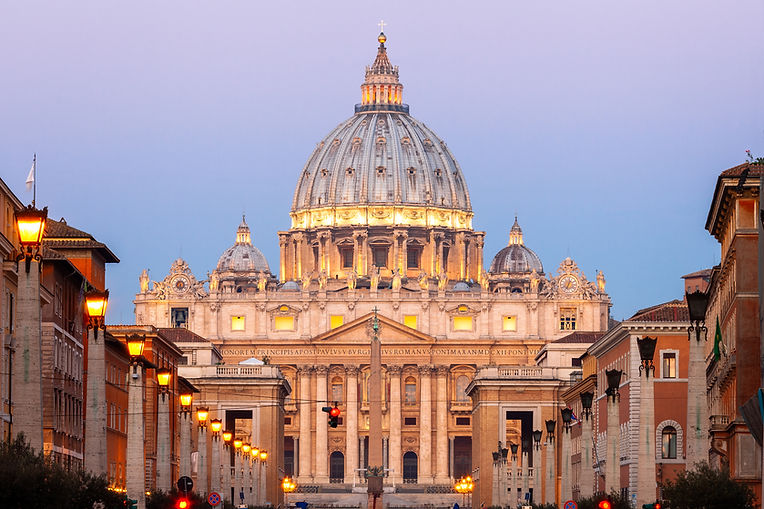
"The Constitution of the United States guarantees liberty of conscience. Nothing is dearer or more fundamental. Pope Pius IX, in his Encyclical Letter of August 15, 1854, said: `The absurd and erroneous doctrines or ravings in defense of liberty of conscience are a most pestilential error--a pest, of all others, most to be dreaded in a state.' The same pope, in his Encyclical Letter of December 8, 1864, anathematized `those who assert the liberty of conscience and of religious worship,' also 'all such as maintain that the church may not employ force.' {Great Controversy, page 564.5}
When the early church became corrupted by departing from the simplicity of the gospel and accepting heathen rites and customs, she lost the Spirit and power of God; and in order to control the consciences of the people, she sought the support of the secular power. The result was the papacy, a church that controlled the power of the state and employed it to further her own ends, especially for the punishment of "heresy." In order for the United States to form an image of the beast, the religious power must so control the civil government that the authority of the state will also be employed by the church to accomplish her own ends. {Great Controversy, page 443.2}
"The pacific tone of Rome in the United States does not imply a change of heart. She is tolerant where she is helpless. Says Bishop O'Connor: 'Religious liberty is merely endured until the opposite can be carried into effect without peril to the Catholic world.'. . . The archbishop of St. Louis once said: 'Heresy and unbelief are crimes; and in Christian countries, as in Italy and Spain, for instance, where all the people are Catholics, and where the Catholic religion is an essential part of the law of the land, they are punished as other crimes.'. . . {Great Controversy, page 565.1}

Have these persons forgotten the claim of infallibility put forth for eight hundred years by this haughty power? So far from being relinquished, this claim was affirmed in the nineteenth century with greater positiveness than ever before. As Rome asserts that the "church never erred; nor will it, according to the Scriptures, ever err" (John L. von Mosheim, Institutes of Ecclesiastical History, book 3, century II, part 2, chapter 2, section 9, note 17), how can she renounce the principles which governed her course in past ages? Great Controversy, page 564.1
The papacy has attempted to change the law of God. The second commandment, forbidding image worship, has been dropped from the law, and the fourth commandment has been so changed as to authorize the observance of the first instead of the seventh day as the Sabbath. But papists urge, as a reason for omitting the second commandment, that it is unnecessary, being included in the first, and that they are giving the law exactly as God designed it to be understood. This cannot be the change foretold by the prophet. An intentional, deliberate change is presented: "He shall think to change the times and the law." The change in the fourth commandment exactly fulfills the prophecy. For this the only authority claimed is that of the church. Here the papal power openly sets itself above God. {GC 446.2}

The sins of Babylon will be laid open. The fearful results of enforcing the observances of the church by civil authority, the inroads of spiritualism, the stealthy but rapid progress of the papal power --all will be unmasked. By these solemn warnings the people will be stirred. Thousands upon thousands will listen who have never heard words like these.-- Great Controversy pages 603, 604, 606 (1911). {Last Day Events page 199.3}
UNION OF CHURCH AND STATE IN THE UNITED STATES DEVELOPS THE IMAGE OF
THE BEAST, REV. 13; 11- 17.
1. Religious liberty is granted to the citizens of the United States by the First Amendment to the Constitution, as follows: "Congress shall make no law respecting the establishment of religion or prohibiting the free exercise thereof."
2. Throughout the past century, numerous organizations have emerged with a compelling mission: to amend the Constitution and officially recognize the United States as a Christian nation. Their aim is to embed Christian principles deeply within the laws, institutions, and practices of our government, ensuring that they reflect the nation's foundational values. Despite their dedication and efforts, they have yet to realize this significant goal.
3. On Feb. 29, 1892, the Supreme Court of the United States rendered a decision, in which the following expressions occur: "This is a religious people," "this is a religious nation," and "this is a Christian nation." Appendix to Union of Church and State, pages 7; 11, 12.
4. This ruling underscores the prominent role of the Christian faith in the United States, much like Constantine's recognition of the Catholic Church in Rome. It opens the door to a deeper examination of religious beliefs and their profound impact on our national values.
5. In 1892, the managers of the Chicago World's Fair sought financial support from Congress. In response, a group of devoted clergymen from both Protestant and Catholic communities came together to make a heartfelt appeal. They urged Congress to consider granting aid only if the Fair agreed to close its gates on Sundays.
Note. —Congress had many years before been petitioned for a Sunday law, but up to this time they have failed to prevail upon Congress to pass such a law.
6. On July 10, 1892, the following amendment was offered to the appropriation bill: "And that provision has been made by the proper authorities for the closing of the exposition on the Sabbath day." The reason offered for this proposed amendment was the fourth, or Sabbath, commandment, which was read by the secretary. Congressional Record, July 10, 1892, page 6614.
7. There was an insightful discussion about the Sabbath, during which the issue was explored and confidently demonstrated that the commandment designates the seventh day, rather than the first, as the true Sabbath.
8. On July 12, the provision was changed to read as follows: "And that provision has been made by the proper authority for the closing of the exposition on the first day of the week, commonly called Sunday," and finally passed. Congressional Record, July 12, 1892, page 6701.
9. It's evidentthat Congress made a deliberate choice to replace the Lord's Sabbath with the first day of the week for the closing of the exposition. This decision marks a pivotal shift, compelling us to thoughtfully examine the broader implications of this change with both openness and understanding.
10. Congress's mandate to recognize the first day of the week under specific circumstances appears to disregard the crucial First Amendment principle that prohibits religious legislation. This situation raises significant questions about how we can effectively balance cherished traditions with the constitutional freedoms essential to our diverse society.
11. It’s remarkable to observe that state constitutions protect religious freedom and restrict religious laws, yet the majority of states maintain Sunday laws. What’s particularly interesting is that many of these laws provide exemptions for those who observe Saturday as their Sabbath, reflecting a commendable respect for diverse beliefs.
12. From the above, It’s clear that the United States is mirroring Rome in its approach to religious legislation, which suggests that the image of the beast is currently taking shape. SUNDAY LAW
9 And the third angel followed them, saying with a loud voice, If any man worship the beast and his image, and receive his mark in his forehead, or in his hand,
10 The same shall drink of the wine of the wrath of God, which is poured out without mixture into the cup of his indignation; and he shall be tormented with fire and brimstone in the presence of the holy angels, and in the presence of the Lamb: Revelation 14:9-10